
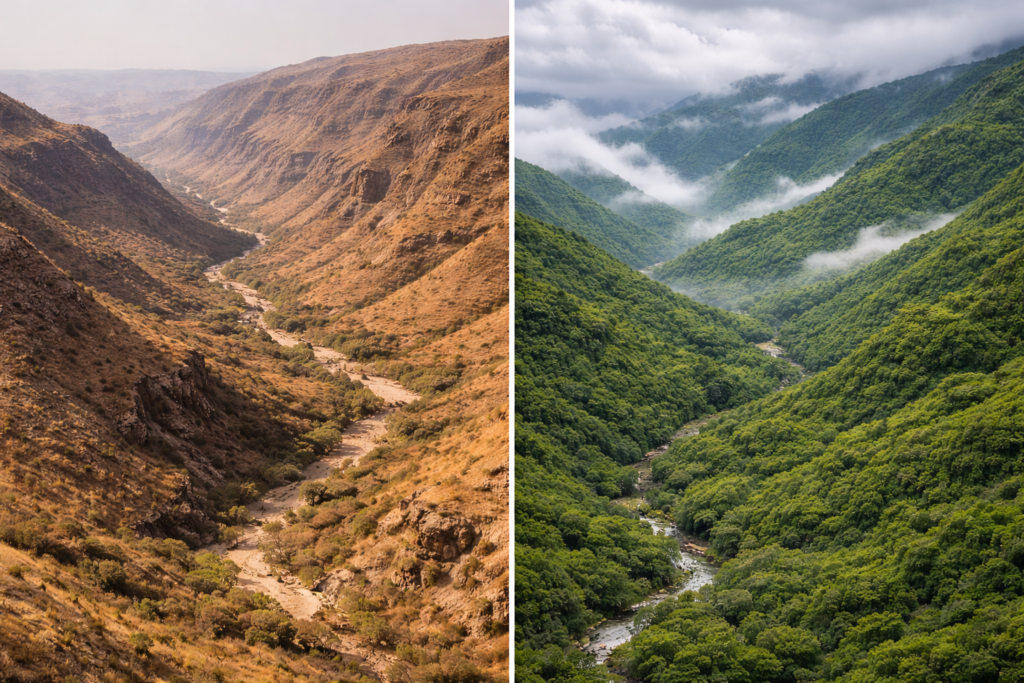
✅ Quick Answer: When is the best time to visit Salalah?
Peak Khareef: Mid-July to mid-August for maximum greenery & coolest temps (18-22°C). Avoid crowds: Late June or early September. Book hotels: 2-3 months ahead for July/August. See full month-by-month guide ↓
The short answer: for Khareef’s famous green transformation, visit between mid-July and mid-August. For fewer crowds but still-beautiful scenery, try late June or early September. For beach weather and sunshine, October through February is ideal. But each window offers something genuinely different, and the best time depends on what you want from your trip.
Month-by-Month Breakdown
| Month | Weather | Crowds | Best For |
|---|---|---|---|
| Late June | Mist begins, 22-26°C | Low | Early birds, budget travelers |
| July | Peak green, 18-24°C | High | Photography, waterfalls, festivals |
| August | Lush landscapes, 19-25°C | Very High | Families, Khareef Festival events |
| Early September | Green fading, 21-27°C | Medium | Lower prices, fewer crowds |
October to February: The Dry, Sunny Season
This is Salalah’s “winter” — though by European standards it feels like a warm summer. Daytime temperatures range from 25°C to 30°C, skies are clear and sunny, and there is virtually no rainfall. The Khareef greenery has faded, but the beaches, archaeological sites, and mountain views are spectacular. Hotel prices drop significantly compared to Khareef peak. This is the best time for beach holidays, scuba diving, visiting the frankincense sites, and exploring without crowds. The Dhofar Mountains are dry and golden-brown but still dramatic.
March to May: Hot and Quiet
Temperatures climb steadily from 30°C towards 38°C by May. This is the quietest period in Salalah with the lowest hotel prices. The landscape is at its driest. It is still a perfectly functional time to visit — the beaches remain beautiful, and the historical and archaeological sites are uncrowded — but the heat limits outdoor exploration. If you are on a tight budget and can handle the warmth, this is when Salalah is at its most affordable.
Late June: Khareef Begins
The first monsoon clouds arrive. Temperatures drop from the high 30s into the mid-to-high 20s almost overnight. Light mist and drizzle begin. The mountains start turning green. This is the earliest you can catch the Khareef transformation. Visitor numbers are low compared to peak. Hotels are available and often offer early-season rates. The greenery is not yet at its fullest, but watching the transformation begin has its own magic.
July to Mid-August: Peak Khareef
This is the main event. The mountains are at their greenest. Waterfalls flow at full force. Wadi Darbat is alive with streams and its famous seasonal lake. The mist rolls through mountain passes. Temperatures sit comfortably at 20–27°C. The Salalah Tourism Festival runs throughout this period with cultural events, food festivals, and entertainment.
The trade-off: this is also the busiest and most expensive period. Hotels book out weeks in advance. Flights from Dubai, Muscat, Riyadh, and Kuwait fill up. Popular sites like Wadi Darbat can get crowded, especially on weekends (Friday–Saturday in Oman). If you want peak Khareef, book your hotel and flights at least 6–8 weeks ahead.
Pro tip: Visit Wadi Darbat and other popular sites on weekday mornings to avoid the GCC weekend crowds. The experience is dramatically better.
Late August to Mid-September: Khareef Fades
The rains taper off. Skies begin to clear. The green slowly shifts to gold. Waterfalls reduce but do not disappear entirely. Temperatures start climbing back towards the low 30s. Visitor numbers drop noticeably. This is one of the best-kept secrets for Khareef visitors: the scenery is still beautiful (just transitioning rather than peak green), hotels have availability, and the prices begin to drop.
When to Book
For peak Khareef (July–August): book flights and hotels 6–8 weeks in advance minimum. During this period, budget hotels in Salalah can increase from OMR 15/night off-season to OMR 60/night during Khareef. Five-star resorts like Anantara Al Baleed and Salalah Rotana offer early-bird Khareef packages with up to 30% discounts if booked in advance. For shoulder Khareef (late June or September): you can often book 2–4 weeks ahead with good availability. For the dry season (October–February): booking a few days in advance is usually sufficient except during Eid holidays.
- Hotels in Salalah fill up fast for July/August – book 2-3 months ahead
- Flights from Muscat to Salalah increase in price during peak Khareef
- Consider staying in nearby towns (Mirbat, Taqah) for lower rates
- Weekday arrivals often have better hotel availability than weekends
Ready to choose your accommodation?
See our Salalah Khareef pages:
What is Khareef
Things to Do in Salalah
Where to Stay in Salalah
Best Restaurants in Salalah
Muscat to Salalah by road
Salalah with Kids
Khareef on a Budget
Salalah Khareef Packing List
Salalah Events & Festivals