
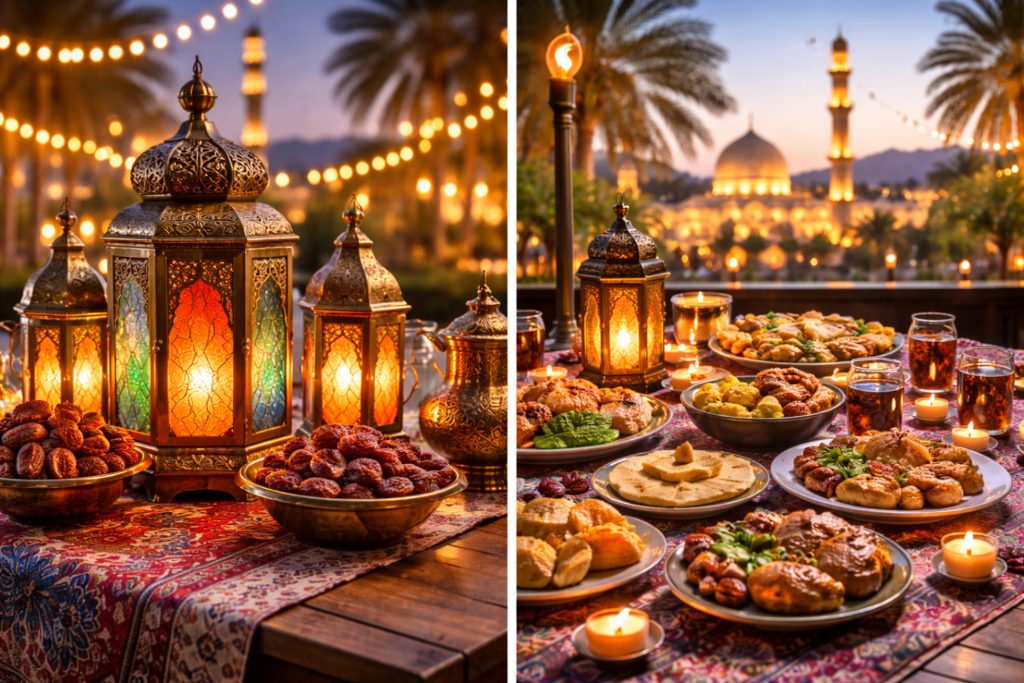
Ramadan in Oman is one of the most meaningful times of the year and one of the most important periods for expats to understand properly. Daily rhythms change, opening hours shift, and the city feels different in a way that is calm, respectful, and deeply local.
This guide explains what changes in Muscat during Ramadan and how to move through the month with ease and respect.
Ramadan in Oman is something we genuinely look forward to every year. The pace of the city changes, the evenings come alive with iftar gatherings, and there’s a warmth and generosity in the air that’s hard to describe until you’ve experienced it. If it’s your first Ramadan here, you might feel unsure about what’s expected of you as a non-Muslim. This guide covers the practical rules, the cultural etiquette, and the things that make Ramadan in Oman genuinely special.
What changes most during Ramadan
- daytime pace
- opening hours
- social rhythm in the evening
- eating and drinking etiquette in public
- and the general flow of daily life
When Is Ramadan? — Dates for Ramadan Oman Expat Life
- 2027: Expected ~January 8–February 5
- Dates move forward ~11 days each year (lunar calendar)
Eating and Drinking Rules During Ramadan Oman Expat Must Follow
Eating, drinking, and smoking in public during daylight hours is ILLEGAL — even for non-Muslims. Fines apply. Most workplaces have designated eating rooms for non-fasting employees. Hotels serve food to guests regardless.
Work Hours During Ramadan Oman Expat Schedule
Government and many private sector: reduced to 6 hours (8am–2pm or 9am–3pm instead of 8 hours).
What’s Open and Closed During Ramadan Oman Expat
Many restaurants close daytime or offer limited menus. Malls stay open (may open later). From sunset (Iftar), Muscat comes alive — packed until 2am. Traffic post-Iftar is heavy.
Driving Safety During Ramadan Oman Expat Life
The hour before Iftar (sunset) is the most dangerous driving time. People are hungry, sometimes aggressive. Accident rates rise. Avoid driving 4:30–6:30pm during Ramadan.
Dress Code
More conservative than usual. Women: cover shoulders, knees, arms outside private spaces. Men: avoid shorts in public.
The Best Things About Ramadan Oman Expat Life
- Iftar buffets at restaurants and hotels — extraordinary value at OMR 12–20/person (normally triple).
- Muttrah Souq and neighbourhoods set up street food stalls after Iftar.
- Traditional Omani food — try Harees (wheat and meat porridge) and Shuwa (slow-cooked lamb) — mainly available during Ramadan and Eid.
- Cultural exchange — Omani colleagues may invite you to Iftar. Accept — bring dates, sweets, or chocolates.
Hidden Details About Ramadan Oman Expat
- Ramadan is actually one of the best times to dine out at night. Special menus are extraordinary value.
- Nightclubs and alcohol venues close throughout. Hotels can serve alcohol to guests in private settings.
Embrace Ramadan rather than just getting through it. Accept iftar invitations from Omani colleagues. Try the special Ramadan dishes. Appreciate the quieter mornings and the festive evenings. Many expats tell us that their first Ramadan in Oman was one of the most memorable cultural experiences of their lives.
Related: Cost of Living | Supermarkets | Weekend Ideas