
Opening a bank account in Oman is usually straightforward once you have your residency card. The frustrating part is the gap before that, when you have arrived, started spending money, and discover that some banking steps depend on paperwork that is still in progress.
This guide explains what matters most: when you can apply, which banks tend to suit expats best, what documents you need, and how to manage the first weeks before everything is fully in place.
The Most Important Thing to Know First
| Bank | Best for | Main strength | Watch-out |
|---|---|---|---|
| Bank Muscat | most salaried expats | easiest default choice | salary-account thresholds |
| Sohar International | ITC buyers, strong digital users | flexible property-buyer cases | less “default” for payroll |
| NBO | employer-linked convenience | solid digital banking | lower expat visibility |
| Bank Dhofar | Salalah-based expats | useful if employer banks there | weaker branch convenience in Muscat |
Bank Muscat allows instant account opening via its app once you have a residence card and meet the salary criteria — no branch visit needed. Most expats queue at branches unnecessarily. Basic savings accounts have lower thresholds and are useful while waiting for your first salary. Sohar International has opened accounts for ITC property buyers without requiring a full residence card, using property purchase documents. These details matter because they save you weeks of frustration that other guides do not prepare you for.
Bank Muscat — The Default Choice for Most Expats
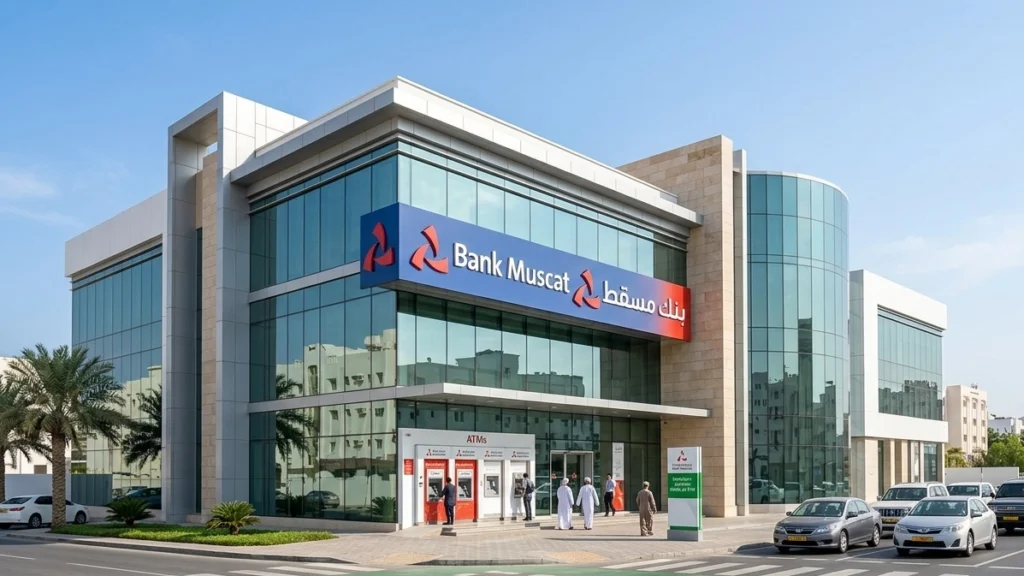
Bank Muscat is Oman’s largest bank, partly owned (23.63%) by Royal Court Affairs, and the institution most employers use for salary payments. If your company already banks here, this is the path of least resistance.
The salary account requires a minimum of OMR 500 per month transferred to Bank Muscat for the last three months. If you have not yet received your first salary, you can open a basic savings account with no minimum salary requirement and upgrade once payroll is confirmed. The mobile banking app offers full functionality including transfers, bill payments, and account management. Islamic banking is available through Bank Muscat’s Meethaq arm for those who prefer Shariah-compliant products. English-speaking staff are available at all branches.
Most expats who are paid locally start with a Bank Muscat salary account.
One detail most expats miss: your bank account is tied to your sponsor. When you change employers, you may need to update your account details, and some banks require your new employer’s stamp to continue salary services.
National Bank of Oman (NBO) — Solid Mid-Tier Option
NBO is part of the Commercial Bank of Qatar group and offers good branch coverage and solid online banking. It has a lower profile among expats compared to Bank Muscat, but the service is perfectly functional and the digital platform is modern. Worth considering if your employer banks here, since salary transfers between the same bank are processed faster.
Bank Dhofar — Worth Considering If Your Employer Banks Here
Bank Dhofar is strongest in the Dhofar region and is a practical choice for expats based in Salalah. If your employer uses Bank Dhofar for payroll, banking here simplifies salary processing. The branch network outside Salalah is more limited than Bank Muscat or NBO.
Sohar International — Oman’s Fastest-Growing Bank
Sohar International has grown into one of Oman’s strongest banks after completing its merger with HSBC Bank Oman in August 2023. If you previously banked with HSBC Oman, your accounts and services have been fully transferred to Sohar International.
For most expats, Sohar International stands out for two reasons. First, the bank has opened accounts for ITC property buyers without requiring a full residence card — they accept property purchase documents instead. If you are buying in Al Mouj, Muscat Hills, or another ITC development, this may be your fastest route to an Omani bank account. Second, the merger brought in HSBC’s international banking infrastructure, which means the digital platform and service standards are strong.
The branch network has expanded significantly since the merger, and English-speaking staff are available at major branches.
Documents You Need to Open an Account
For a standard account at Bank Muscat or most other banks, you need your original passport, your Oman residence card, an employment letter confirming your salary, and a completed application form. US nationals or tax residents also need to provide W9 or W8BEN forms. Bring originals of everything — photocopies are not accepted for the initial application. If you have not yet sorted your visa, start there first.
What Happens If You Don’t Have Your Residence Card Yet?
This is the most common frustration for new arrivals. You cannot open a standard bank account without your residence card, and the card takes up to 30 days. During this period, use your international debit or credit card for daily expenses. Notify your home bank before you travel so they do not block your card for overseas transactions. Some expats find that opening a savings account (which has lower requirements) bridges the gap until their residence card arrives.
Islamic Banking Options in Oman
Bank Muscat operates Meethaq, its Islamic banking arm, offering Shariah-compliant current and savings accounts. Al Izz Islamic Bank is Oman’s standalone Islamic bank and may suit expats who prefer a fully Islamic institution rather than a conventional bank’s Islamic window. Both options offer competitive products and are regulated by the Central Bank of Oman.
Online and Mobile Banking Reality in Oman
Bank Muscat’s mobile app is the most mature, supporting transfers, bill payments, and account management. NBO’s digital platform has improved significantly. Sohar International’s digital platform has strengthened significantly since absorbing HSBC Oman’s operations in 2023.
Sending Money Home — Your Options
Exchange houses in Muscat — including Al Ansari, Al Zubair, and Lulu Exchange — typically offer rates 0.5–1.5% better than bank transfers for international remittances. Most expats default to bank transfers and overpay. Wise (formerly TransferWise) also operates in Oman and is competitive for transfers to Europe and the UK. For transfers to India, Bangladesh, and Pakistan, Al Zubair Exchange is a popular specialist. Compare rates before each transfer — the best option changes depending on the corridor and amount.
For a complete overview of living expenses, see our cost of living guide.
Get the Oman Arrival Pack — visa steps, document checklist, neighbourhood profiles, bank account guide, and your first-week action list in one download for OMR 5.
The Complete Expat Guide to Muscat: Everything You Need to Know in 2026
Frequently Asked Questions
Can I open a bank account in Oman without a residence card?
Usually no for a standard account. Most banks require your residence card first.
Which bank is easiest for most expats?
Usually Bank Muscat, especially if your employer already uses it for payroll.
Can ITC property buyers open an account earlier?
In some cases, yes. Sohar International has reportedly accepted property documents in certain cases.
Should I use my bank or an exchange house to send money home?
Often an exchange house gives a better rate, but compare each time.