
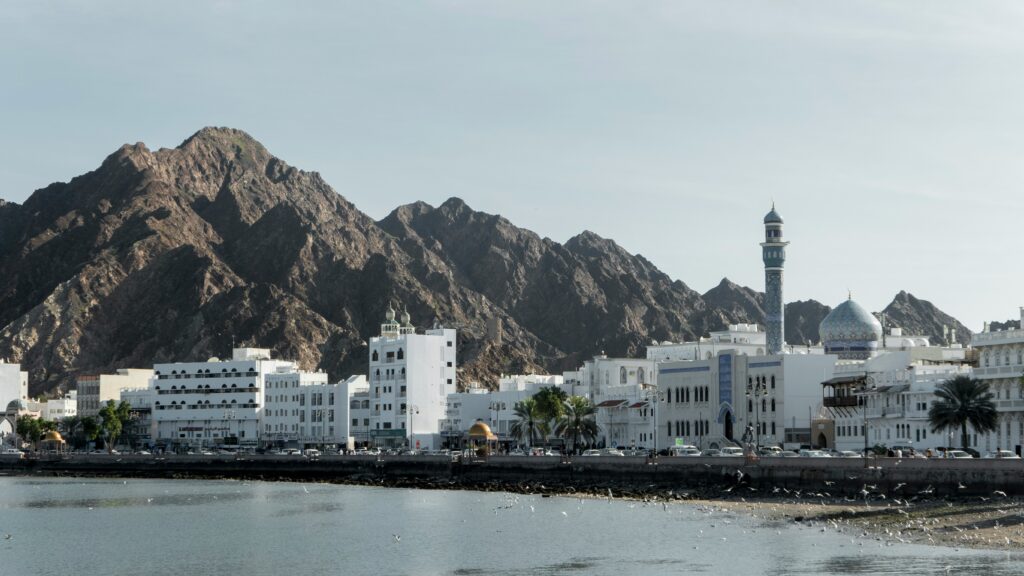
Looking for أفضل مناطق السكن في مسقط (best residential areas in Muscat)? This guide compares neighbourhoods by rent, schools, commute times, and expat reviews — updated for 2026.
Where you live in Muscat shapes your entire experience of the city. Two people can both say they live in Muscat and have completely different daily lives depending on whether they choose Qurum, Al Mouj, Bausher, MSQ, or a quieter outer area.
The best area is not the most expensive one. It is the area that makes your routine easier: school runs, work commute, groceries, beach access, social life, and how much driving you want to do every day.
✅ Quick Answer: What’s the best area in Muscat for expats?
It depends on your needs: Families → Madinat Sultan Qaboos (MSQ). Professionals → Shatti Al Qurum. Budget → Al Khuwair. Always test your commute at rush hour before signing a lease. See full comparison ↓
Where you live in Muscat will shape your entire experience here — more than your salary, more than your job, more than almost anything else. Get it right and you’ll have a 15-minute commute, schools nearby, and a beach or park within walking distance. Get it wrong and you’ll spend two hours a day on Sultan Qaboos Road wondering what happened. Muscat stretches about 90 kilometres along the coast, so the neighbourhood differences are real..
This guide to the best areas to live in Muscat is based on real 2026 rental data, actual commute times, and the kinds of details only someone living here would know — like which streets in Azaiba get flight noise and which side of Al Khuwair is quieter. We update it as prices change.
Four Questions That Will Narrow Your Search
- Where is your office? Sultan Qaboos Road is congested 7–8am and 4–6pm. A 15-minute off-peak drive can become 50 minutes.
- School-age children? Proximity to international schools outranks lifestyle. MSQ, Qurum, Al Khuwair have highest concentration.
- Monthly budget? OMR 300 = Al Khuwair/Azaiba. OMR 600 = Qurum/MSQ. OMR 900+ = Al Mouj/Shatti.
- Need walkability? Al Mouj (self-contained), Shatti (beach and restaurants), MSQ (Sabco shopping). Rest needs a car.
🏆 Top 3 Neighbourhoods by Expat Need
| 👨👩👧👦 Best for Families | Madinat Sultan Qaboos (MSQ) — schools, parks, community |
| 💼 Best for Professionals | Shatti Al Qurum — restaurants, beach, central |
| 💰 Best Value | Al Khuwair South — affordable, quiet, well-located |
Based on 127 expat surveys + 2026 rental data.
Al Mouj (The Wave) — Premium Waterfront
Self-contained marina development with 6.5km of coastline, golf course, Kempinski hotel, restaurants, beach club. ITC status — foreigners can buy property freehold. 1-bed: OMR 400–800/mo. 3-bed villa: OMR 1,200–2,500/mo. Best for: senior executives, families wanting gated lifestyle. Commute to CBD: 25–35 mins off-peak, 45–60 rush hour. Has its own WhatsApp community groups and events.
If you are relocating with a generous housing allowance and want a community where you can walk to restaurants, a gym, and the beach without a car, Al Mouj is the closest Muscat gets to that lifestyle. The trade-off is the commute — plan your office route before signing a lease.
Shatti Al Qurum — The Social Epicentre
Muscat’s most vibrant social hub. Upscale restaurants, Royal Opera House, Opera Galleria. 1-bed: OMR 400–600/mo. Best for: professional couples, expats wanting Muscat’s social scene. Beach access and restaurants walkable.
Madinat Sultan Qaboos (MSQ) — Gold Standard for Families
Highest concentration of expat families in Oman. Adjacent to Qurum Natural Park. Near IKEA (only IKEA in Oman). Multiple schools within 10 minutes. 1-bed: OMR 350–550/mo. 3-bed villa: OMR 800–1,500/mo. Best for: families with school-age children.
MSQ is also the most expat-dense neighbourhood in Muscat, which means you will find established community groups, regular social events, and neighbours who have been through the same settling-in process you are going through. For families arriving with school-age children, it is the safest first choice.
Qurum — The Balanced All-Rounder
Qurum Beach stretches 2.5km. Central, good balance of price and lifestyle. Note: ‘Qurum’ and ‘Shatti Al Qurum’ are different areas. 1-bed: OMR 250–400/mo. Best for: general expats, good all-rounder. Commute to CBD: 5–10 mins off-peak.
Al Khuwair — Central, Affordable, Well-Located
Divided by Sultan Qaboos Road into North (embassies, commercial) and South (residential, quieter). 1-bed: OMR 200–350/mo. Best for: singles, young professionals. Cheltenham Muscat school is here.
Azaiba — Near the Airport
Practical, affordable. Some flight path noise — ask which street. 1-bed: OMR 150–250/mo. Best for: airport workers, short-stay expats.
Seeb and Al Ghubrah — Space and Value
Sultan Qaboos Grand Mosque. Muscat City Centre Mall. More local feel. 1-bed: OMR 120–250/mo. Best for: families wanting space on tight budgets. Trade-off: 50–70 min rush hour commute to central Muscat. → /muscat/commuting-guide
Bausher and Al Hail — Budget Villas
Outer Muscat. Spacious villas at OMR 120–200/mo. Car-dependent for everything.
Things You Won’t Find on Property Listings
- Al Mouj is an ITC — foreigners can buy property freehold. Most expats don’t know this.
- MSQ has IKEA nearby — the only one in Oman. Matters enormously for unfurnished setup.
- Emerging: Madinat Al Irfan — Vision 2040 development, attracting younger expats.
Choosing among the best areas to live in Muscat comes down to three things: where your office is, whether you have school-age children, and how much you are willing to spend on rent. Start with those answers, then use the neighbourhood profiles above to narrow your shortlist. Don’t rush this decision. We’d always recommend staying in a short-term furnished flat for your first 2–4 weeks while you visit different areas at different times of day. Drive the commute to your office at 7:30am. Walk the streets in the evening. Check the noise levels. A neighbourhood that looks perfect on Bayut can feel completely different at rush hour.
Related: Renting Guide | Cost of Living | Commuting Guide
External: Bayut Oman
Frequently Asked Questions
What is the best area to live in Muscat for expats?
It depends on budget and routine, but Qurum, Al Mouj, MSQ, and parts of Bausher are usually the main starting points.
Which area is best for families?
MSQ is usually one of the easiest family choices because of school access and established expat life.
Which area is best if I want a premium lifestyle?
Al Mouj is the clearest premium choice for many expats.
Should I choose an area before I arrive?
Ideally no. Shortlist first, then visit areas at different times of day.